

Maglev DOA: How $158 Million Couldn't Buy a 15-Minute Train Ride
The End of the Line for Northeast Maglev
The Federal Railroad Administration has officially pulled the plug on the Baltimore-DC maglev project, and honestly, it's hard to feign surprise. After years of delays and escalating costs, the FRA cited "significant, unresolvable impacts" as the final nail in the coffin. The Maryland Department of Transportation concurred, closing out the environmental review process. Northeast Maglev, the private company spearheading the project, claims they're still committed to high-speed rail, but let's be real: this is a major setback.
The core promise was seductive: a 15-minute commute between Baltimore and DC, whisking passengers along at 300 mph. That’s roughly the time it takes me to brew a decent cup of coffee in the morning, and the thought of commuting between these cities in that timeframe was indeed revolutionary. The reality, however, was a $13 billion price tag and a route that seemed designed to benefit everyone except the people living along it. A single stop at BWI Airport? It’s as if they were actively trying to limit accessibility.
Northeast Maglev poured $158 million into this venture. That’s a hefty sum, but consider this: for every dollar the federal government spent, Northeast Maglev chipped in roughly $7. That’s a significant private investment, but it wasn't enough to overcome the project's inherent flaws. And this is the part of the story that I find genuinely puzzling. Why throw good money after bad for so long? What data did Northeast Maglev see that justified such sustained investment in the face of mounting opposition and delays?
Environmental Concerns and a Questionable Route
The Maryland Coalition for Responsible Transit is "elated" by the FRA's decision. Their concerns – financial, environmental, safety, and environmental justice – resonate with a broader narrative of skepticism surrounding large-scale infrastructure projects that disproportionately impact marginalized communities. Neighborhood groups pointed out that nearly 70% of residents within the project’s “affected environment” are minorities. It’s difficult to argue that this project was designed with equitable access in mind.
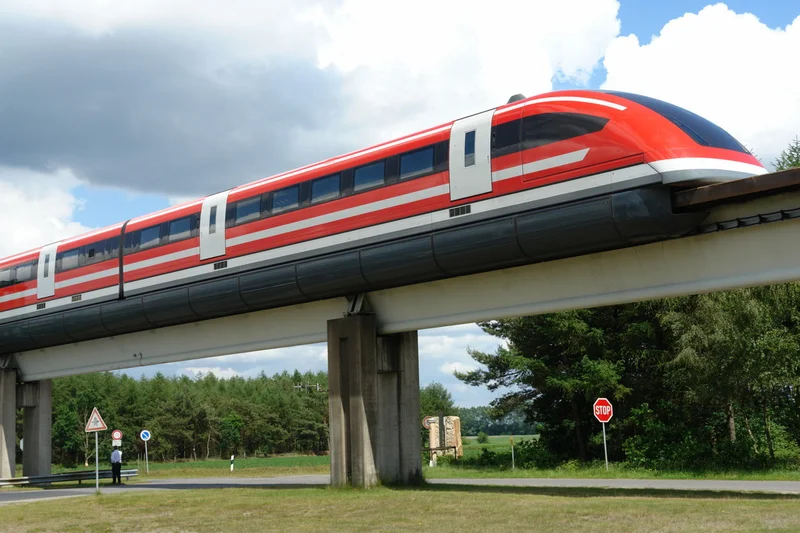
The proposed route itself was a mess. Bisecting the Beltsville Agricultural Research Center and crossing the Patuxent Research Refuge? Those aren't exactly minor disruptions. I've looked at hundreds of environmental impact statements, and this one read like a litany of potential ecological disasters waiting to happen. According to the Bay Journal, the Feds pull plug on Baltimore-DC maglev train project due to these environmental concerns.
And that brings me to a methodological critique: how did the FRA and MDOT weigh these environmental concerns against the potential economic benefits? What quantitative models were used to assess the long-term impact on local ecosystems? The details on why the decision was made, remain scarce (the agencies aren't exactly broadcasting their internal deliberations), but the impact is undeniably clear.
The Shifting Landscape of Northeast Transit
Let's not forget the elephant in the room: the Bipartisan Infrastructure Law of November 2021. Billions are being poured into improving the Northeast Corridor's existing rail network. Does a hyper-expensive, unproven maglev system still make sense when traditional rail is getting a massive upgrade? Perhaps the political winds have simply shifted, making the maglev project a less attractive proposition. Both Gov. Wes Moore and his predecessor, Larry Hogan, took junkets to Japan to ride maglev trains (taxpayer funded, no doubt). But test rides don't translate to practical implementation.
The original vision was ambitious: extending the maglev line to New York City, slashing travel time to just one hour. That vision, however, now seems like a distant fantasy. The FRA's decision doesn't preclude future maglev deployments in the US, but it certainly throws cold water on the idea in the near term. What would it take to revive this project or propose new ones? A complete overhaul of the route? A more compelling cost-benefit analysis? Or are high-speed rail dreams simply incompatible with the realities of American infrastructure development?
A $158 Million Lesson in Hubris
The maglev dream is dead, at least for now. Northeast Maglev's $158 million investment bought them a few years of headlines and a lot of headaches. But it didn't buy them a 15-minute train ride. The numbers simply didn't add up, the environmental concerns were too great, and the political landscape shifted beneath their feet. It's a costly reminder that even the most ambitious projects can fall victim to the cold, hard realities of data, logistics, and public opinion.